What is pityriasis alba?
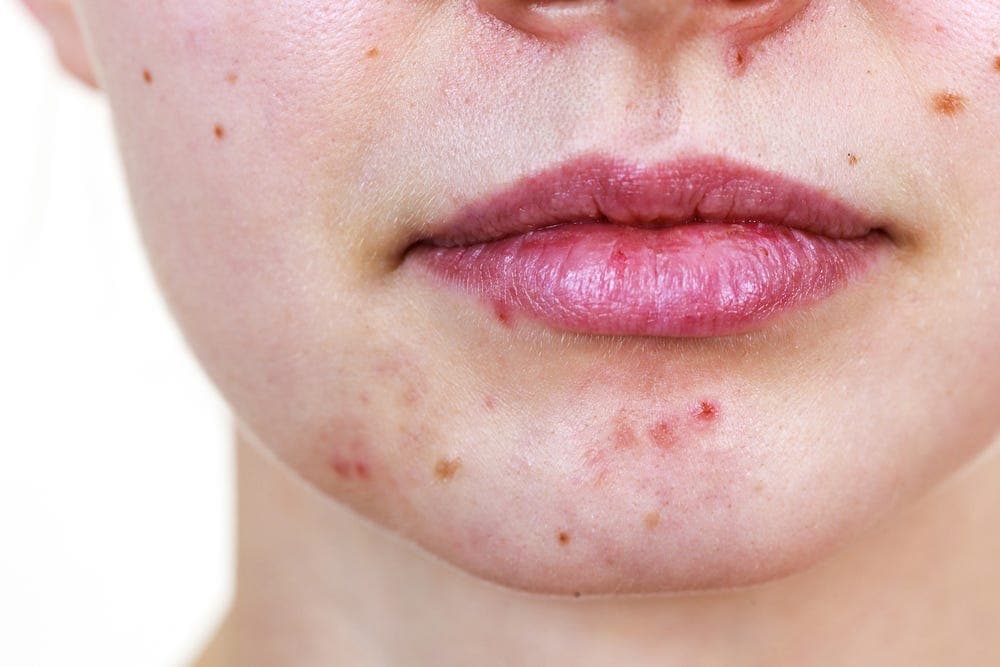
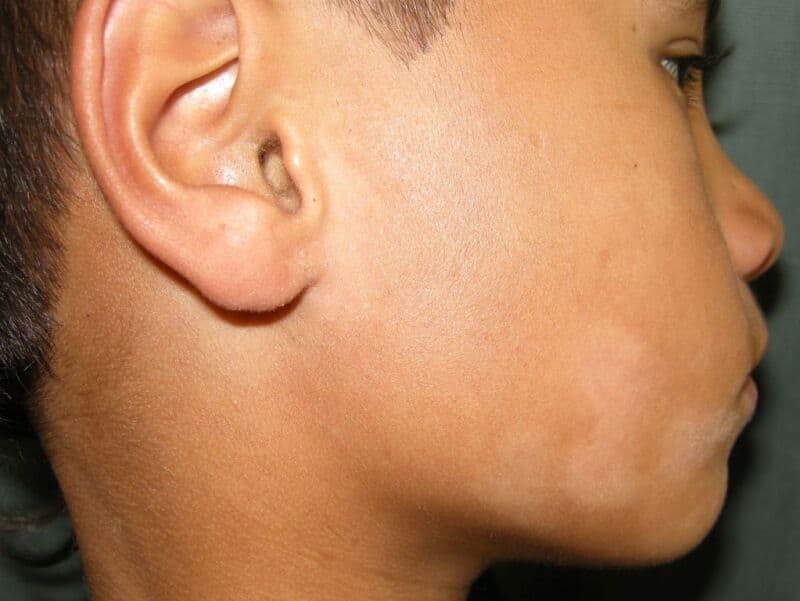
Pityriasis alba is a mild, low-grade form of eczema that leaves pale, slightly scaly patches on the skin, most often on a child's cheeks (DermNet). The name describes the look: pityriasis means fine scale and alba means white (BAD). It is not contagious or inherited (BAD) and it does no lasting harm: most patches fade within a year, some take two or three, and the colour comes back fully without scarring (BAD, DermNet).
Unlike vitiligo, the patches are not pure white and their edges are soft (NHS, PCDS). Unlike a fungal rash, they are not scaly rings and fungal tests are negative (DermNet). Moisturiser and sunscreen are usually all that is needed (BAD).
Around 5% of children have pityriasis alba at some point (DermNet). The pale patches are what parents notice, especially in summer, when the surrounding skin tans and the patches do not (MedlinePlus, DermNet).
Who gets pityriasis alba?
- Children and teenagers aged 3 to 16 are affected most, but younger children and adults can get it too (DermNet).
- Boys and girls equally (DermNet).
- Darker skin shows the pale patches more clearly (DermNet, BAD), and the condition may also be more common in brown and black skin (DermNet).
- Dry skin and atopic dermatitis (the common childhood eczema) often go with it. Dermatologists list pityriasis alba among the skin signs of atopic dermatitis in school-age children and adolescents; the rough upper-arm bumps of keratosis pilaris are another clue to atopic skin (DermNet).
What causes pityriasis alba?
The cause is not known. The best current explanation is mild inflammation of the skin, a low-grade eczema, which leaves the affected area with less melanin for a while (BAD, DermNet). The colour returns completely once the inflammation settles (DermNet).
Several ideas have been studied without a clear answer: ultraviolet light, bathing habits, low levels of trace elements, and Malassezia yeasts on the skin surface (DermNet). None of these is a proven cause, so there is no diet or hygiene change a family needs to make.
Two things do change how visible the patches are. Sun makes the normal skin around them darker, so the pale areas stand out after a holiday or a summer of outdoor play (DermNet, BAD, MedlinePlus). Scaling is more obvious in winter, when the air is drier (DermNet).
What does pityriasis alba look like?
A patch of pityriasis alba usually goes through stages (DermNet):
- A slightly pink, faintly scaly patch, sometimes with a barely raised, grainy surface.
- A paler patch with fine scale on it.
- A smooth pale patch with no scale.
- Gradual return of normal colour.
Typical features (DermNet, MedlinePlus, PCDS):
- Number: from one patch to about twenty.
- Size: 0.5 to 5 cm across.
- Shape: round, oval or irregular, with soft, blurred edges rather than a sharp line.
- Where: mainly the face, especially the cheeks and chin; also the neck, shoulders and upper arms. Patches elsewhere on the body are uncommon.
- Itch: little or none.
- Sun: the patches tan poorly and can redden or burn quickly in the sun (MedlinePlus).
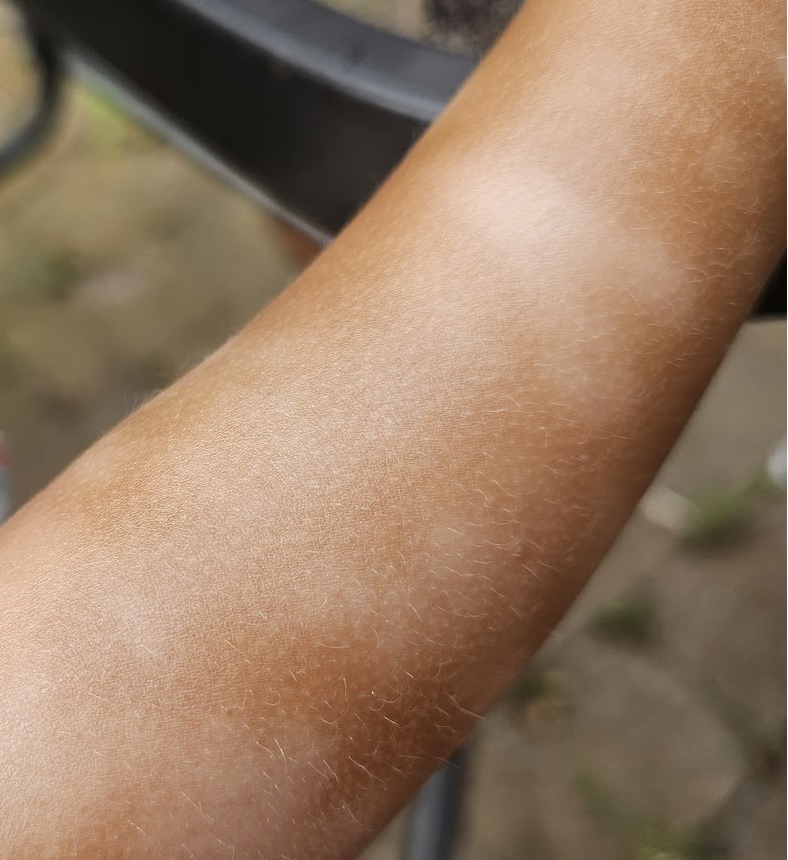
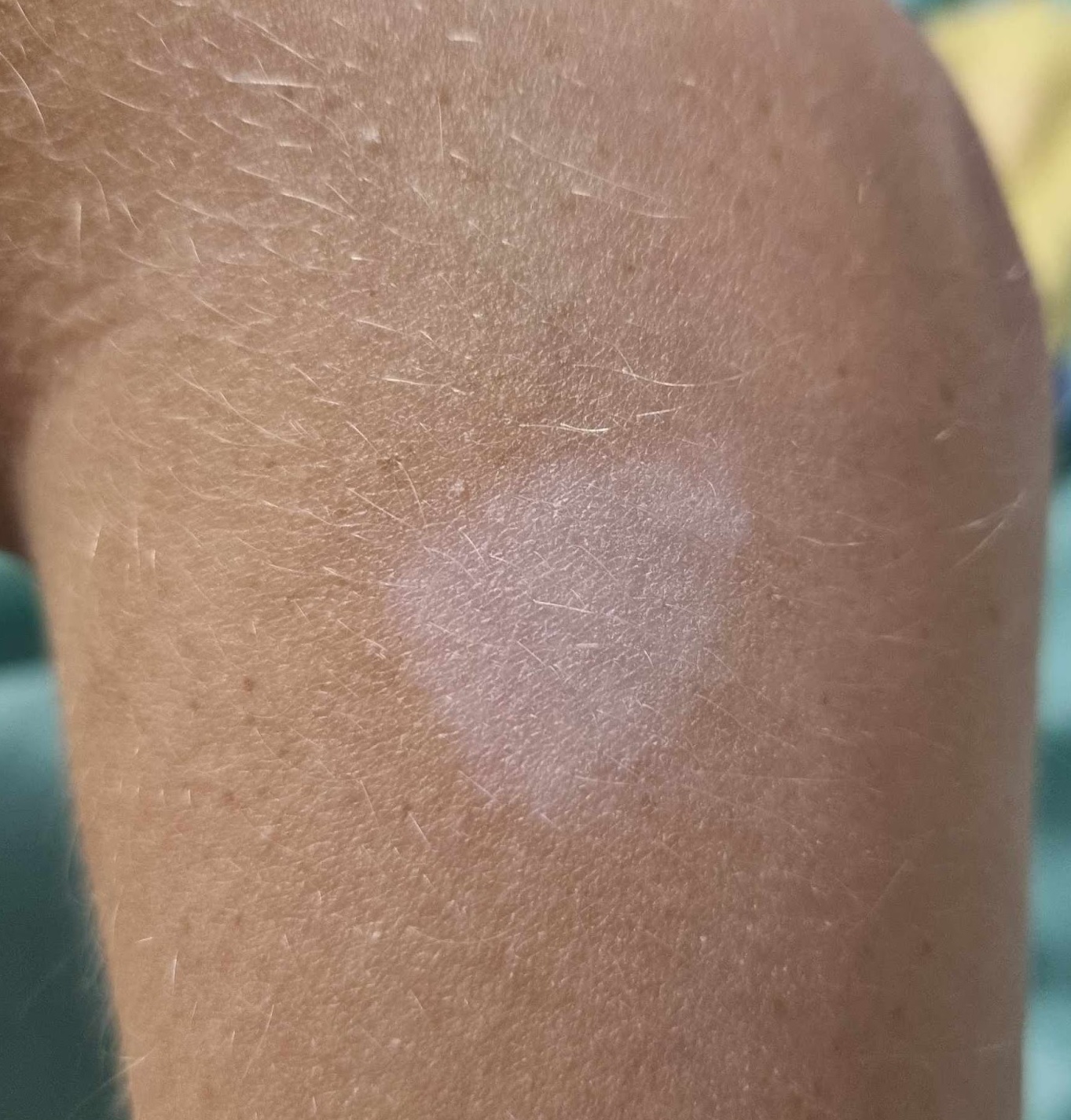
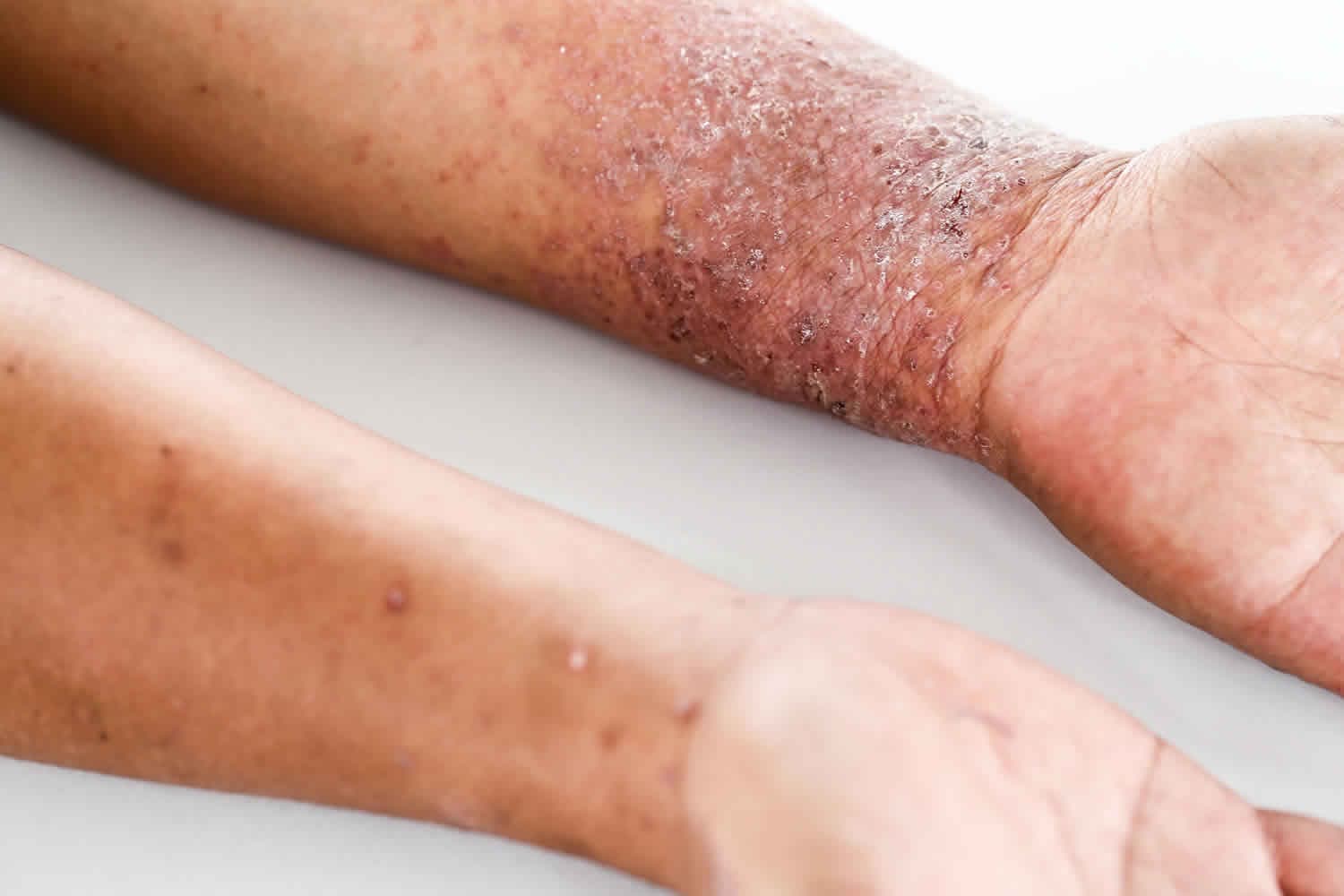
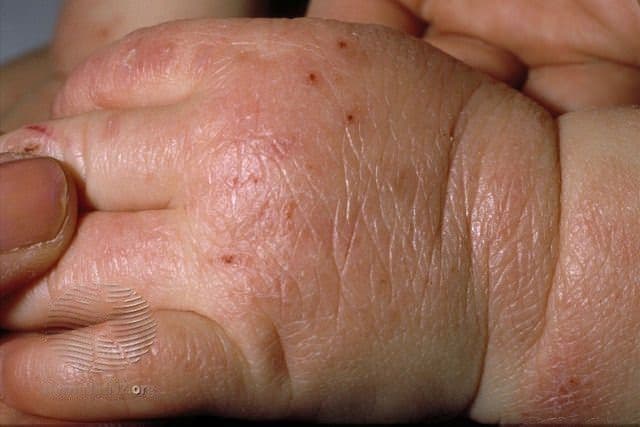
The photographs above show the typical appearance on a child's tanned arm and, at a less common site, on the leg: a faint, round, pale area with blurred edges and a slightly dry surface. There is no sharp white border and no raised scaly ring.
How long does pityriasis alba last?
On average it lasts about a year. The range is wide, from a few months to two or three years, and the colour returns completely without scarring (DermNet, BAD). Nothing needs to be done to make this happen; treatment only deals with dryness, redness and visibility in the meantime (DermNet, PCDS).
What else could the pale patches be?
Several conditions cause lighter patches. The edges, the scale and the location separate them (DermNet, NHS, PCDS).
| Condition | How it differs from pityriasis alba |
|---|---|
| Vitiligo | Patches are completely white, not just paler, and usually permanent (NHS). Their edges are clearer than those of pityriasis alba, and under a Wood's lamp they become more pronounced while pityriasis alba barely changes (PCDS). Hair in a vitiligo patch can turn white (NHS). |
| Pityriasis versicolor | A yeast overgrowth (sometimes wrongly called ringworm) on the trunk, neck or arms, favoured by hot, humid weather and heavy sweating. Patches are finely scaly and can be pale, coppery brown or pink; under a Wood's lamp they may fluoresce yellow-green (DermNet). |
| Ringworm (tinea corporis) | Starts as one red, scaly, itchy patch that spreads outwards into a ring with a raised scaly rim and a paler centre (DermNet). Contagious, unlike pityriasis alba. |
| Idiopathic guttate hypomelanosis | Many small white spots of 2 to 5 mm on sun-exposed forearms, shins and chest in adults, increasing with age. They do not regain their colour (DermNet). |
| An active eczema patch | Atopic dermatitis is itchy, dry, cracked, crusty or thickened and comes and goes in flares (NHS). A pityriasis alba patch is calm, pale and barely itchy (DermNet, BAD). |
How is pityriasis alba diagnosed?
A dermatologist usually diagnoses pityriasis alba by looking at the skin and asking about dry skin and eczema, the conditions it usually goes with (BAD, MedlinePlus, DermNet). Tests are only needed to rule out the look-alikes above (BAD, MedlinePlus, DermNet):
- Wood's lamp: the pale area shows little or no change and does not fluoresce, which separates it from vitiligo and pityriasis versicolor (DermNet, PCDS).
- Skin scraping for fungus: microscopy and culture are negative in pityriasis alba (DermNet).
- Dermoscopy: under the dermatoscope the patch is a poorly defined pale area with fine white scale, a faint remaining pigment pattern and hair of normal colour (DermNet).
- Skin biopsy: rarely required; when done, it shows mild eczema-type inflammation and reduced melanin (DermNet).
Because the diagnosis rests on appearance and history, pityriasis alba can usually be assessed from photographs. An iDerma dermatologist asks for daylight pictures of the patches and of the same area on the other side of the body, how long they have been there, whether they itch and whether the child has eczema. A Wood's lamp or a scraping, when needed, is done in person.
Treatment: what helps and what does not
Most children need no treatment, because the condition clears by itself (DermNet, PCDS, BAD). Treatment has two practical aims: to settle dryness or redness, and to make the patches less visible while they fade.
- Moisturiser is the mainstay. Applied regularly, two or three times a day and more often if the skin is very dry, it improves the dry, scaly look (PCDS, DermNet, NHS). A plain, fragrance-free cream is enough; iDerma dermatologists usually suggest a simple glycerin- or ceramide-based cream. Products containing urea can sting on scratched or cracked skin (DermNet), so avoid them there.
- A mild steroid cream for a short course can reduce redness and itch when a patch is in its early, inflamed stage. It is prescribed and supervised by a doctor and is not needed for pale, calm patches (DermNet, PCDS, BAD).
- Steroid-free anti-inflammatory creams, the steroid-sparing creams used in eczema (PCDS), may work as well as a mild steroid and have been reported to speed the return of colour (DermNet, PCDS). A dermatologist decides whether they are worth using.
- Ultraviolet (UV) light treatment in a clinic is listed as one way of controlling the inflammation (MedlinePlus); it has no place in ordinary pityriasis alba, which needs no treatment at all (DermNet).
What does not help: antifungal creams. Fungal tests are negative in pityriasis alba (DermNet) and it is not an infection (BAD), so there is nothing for an antifungal to act on. Links with trace elements have been studied and not confirmed (DermNet), so supplements are not part of treatment.
Sun protection and daily care
Sunscreen is the measure that makes the patches less noticeable (DermNet, BAD). It limits tanning of the surrounding skin, so the contrast stays small, and it helps prevent the patches themselves from burning (DermNet, BAD, MedlinePlus). In summer this means a broad-spectrum sunscreen on the face every morning, a hat and shade in the middle of the day.
Daily care follows the rules for eczema-prone skin (NHS):
- Apply moisturiser after washing, while the skin is still slightly damp, and smooth it on in the direction of hair growth rather than rubbing it in.
- Use a soap substitute or a gentle wash instead of foaming soap.
- If a steroid cream has been prescribed, leave 20 to 30 minutes between it and the moisturiser so the steroid cream is not diluted.
- Stop a product that keeps stinging or burning after a few days and ask for an alternative.
If the child also has an itchy, red, cracked rash in the elbow or knee creases, that is very likely eczema and is managed as such; see atopic dermatitis in children. Because it is not contagious (BAD), there is no reason to keep a child out of school, sport or swimming.
When to see a dermatologist
Pityriasis alba itself is never urgent. See a dermatologist, in person or through an online consultation, if:
- a patch is pure white with a clear edge, or the hair in it has turned white: possible vitiligo (NHS, PCDS);
- the patches are on the trunk, neck or arms, finely scaly, and worse after hot, sweaty weather: possible pityriasis versicolor (DermNet);
- a patch is itchy, red and spreading outwards as a ring: possible ringworm (DermNet);
- the patches keep growing or multiplying, or have not started to fade after a year;
- the first patches appear in an adult. Pityriasis alba is mainly a condition of children and young people (DermNet, PCDS, BAD), so in an adult a dermatologist will want to exclude vitiligo, pityriasis versicolor and the small sun-related white spots of older skin (idiopathic guttate hypomelanosis) first;
- you are simply unsure what the patches are.
What to do now
Photograph the patches in daylight without flash, and note when they appeared and whether they itch. Start a fragrance-free moisturiser two or three times a day and sunscreen on the face every morning. If the patches match the description above, that is usually all that is needed, and the colour will return. If any of the warning signs apply, or you want the diagnosis confirmed, send the photographs for an online consultation. In iDerma's experience most cases are settled from the pictures, and the dermatologist will say whether this is pityriasis alba, whether a cream would help, and when to look again.