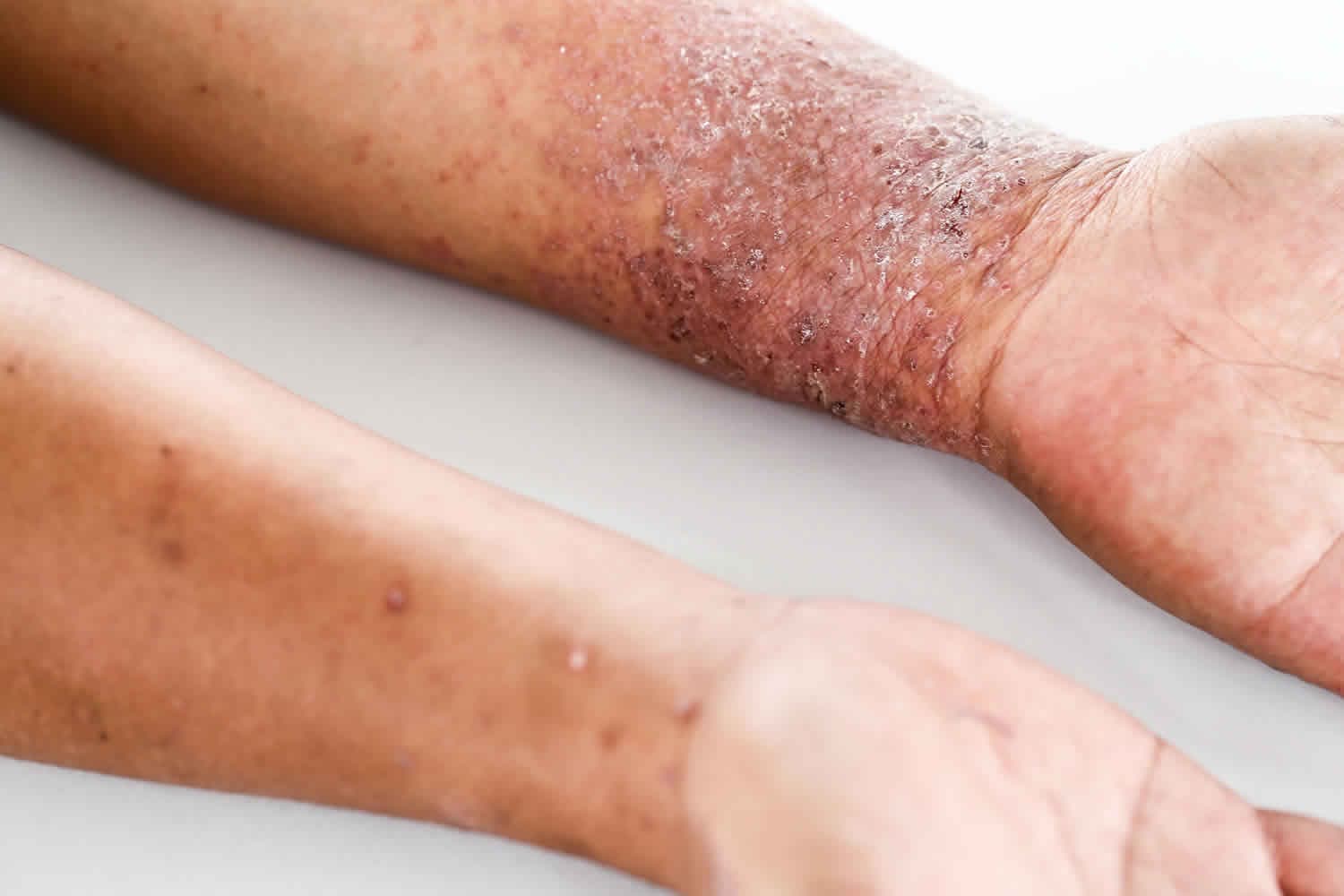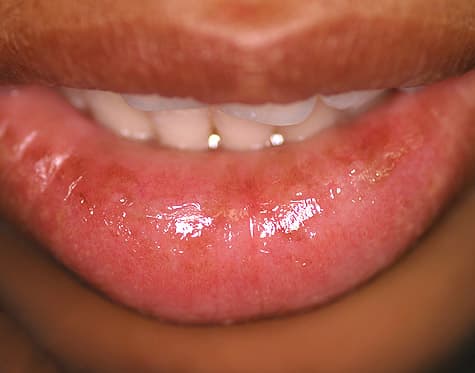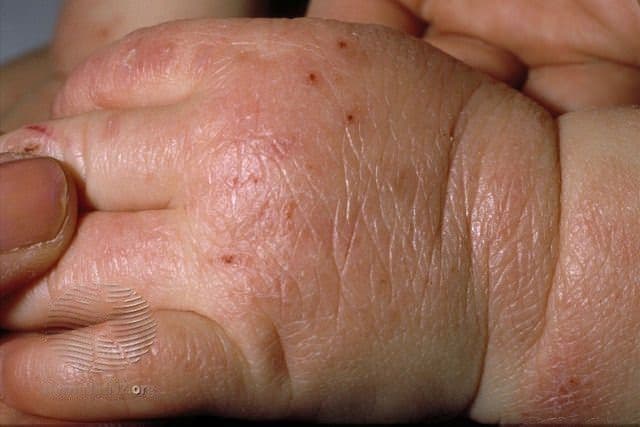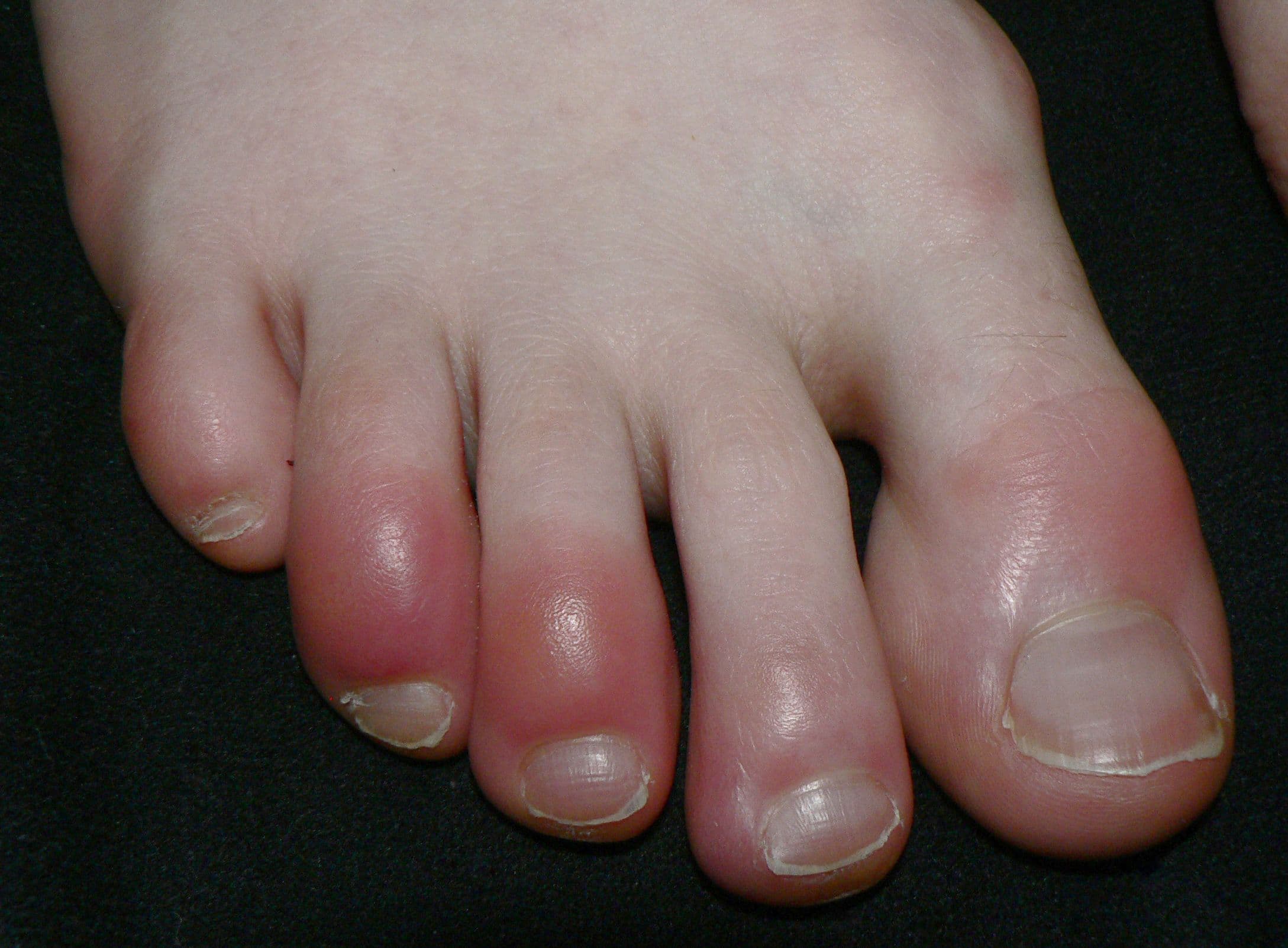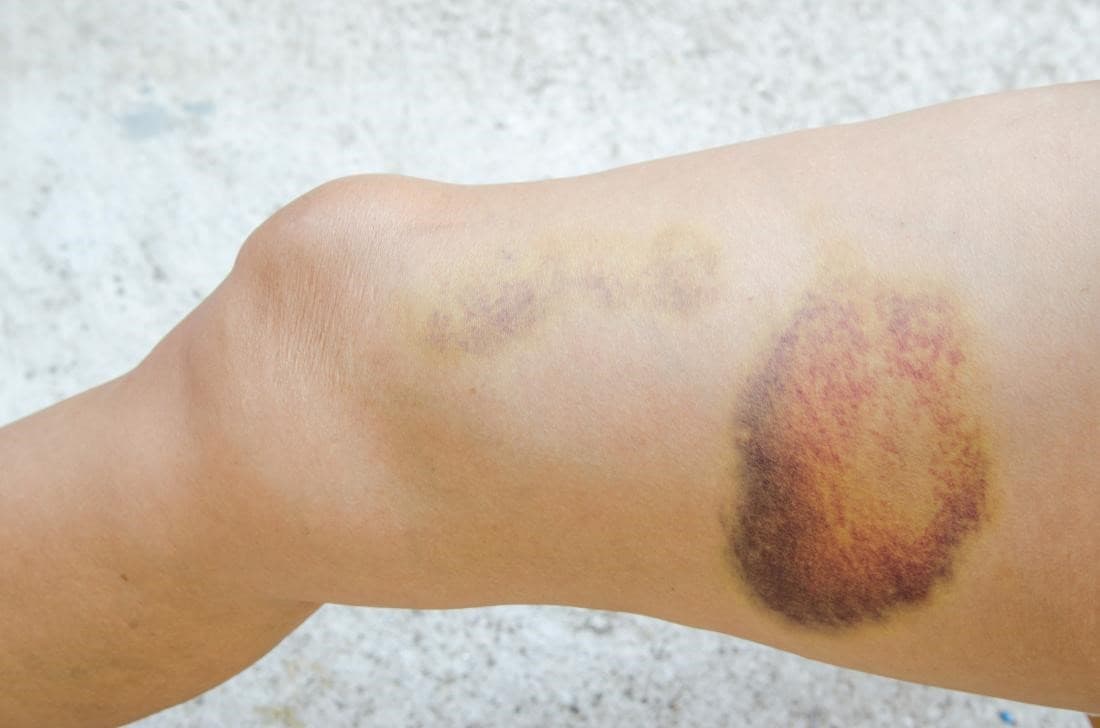
What is a hematoma?
A hematoma (British spelling: haematoma) is a collection of blood that has leaked out of a damaged blood vessel and pooled in the tissue around it. The blood has nowhere to drain, so it fills a space and pushes on the surrounding tissue (Cleveland Clinic). Most hematomas form under the skin or in a muscle after a knock, a fall or a sports injury, and most clear on their own.
A hematoma is not quite the same as a bruise, although the two overlap. A bruise (contusion, or ecchymosis in medical language) is a flat patch of discoloured skin from small vessels bleeding just under the surface. A hematoma is a larger collection of blood: it is usually raised, you can often feel it as a lump, and it hurts when pressed (Cleveland Clinic). The border between the two is not sharp, and MedlinePlus lists 'hematoma' as an alternative name for a bruise (MedlinePlus).
Hematomas can also form deeper in the body: in a muscle, on the surface of a bone, under a nail, in the outer ear, in the abdominal wall or breast, or inside the skull (Cleveland Clinic, MedlinePlus). This article covers the hematomas you can see or feel in the skin and soft tissue, and the warning signs that mean a hematoma somewhere else needs urgent care.
Types of hematoma
By depth, MedlinePlus distinguishes three types of bruise, a word it treats as synonymous with hematoma (MedlinePlus):
- Subcutaneous: directly under the skin.
- Intramuscular: inside the belly of a muscle. Using the muscle hurts; a deep thigh bruise is painful when you walk or run.
- Periosteal (bone bruise): on the surface of a bone. The most severe and painful type.
Some sites behave differently and have their own names:
- Subungual hematoma (a bruised nail): blood trapped under a fingernail or toenail after a crush or a blow, or from repeated pressure such as running shoes that are too tight. The nail turns black and blue or black and purple, and because the blood has nowhere to go it presses on the nail and can be very painful (Cleveland Clinic).
- Auricular hematoma (ear or pinna hematoma): blood that collects between the ear cartilage and its lining (the perichondrium) after a blow, most often in boxing, rugby and wrestling (BMJ Case Reports 2024, JETem 2026). It needs urgent drainage and a pressure dressing: if treatment is delayed or inadequate, the cartilage can die and the ear is left permanently misshapen, the 'cauliflower ear' of contact-sport players (BMJ Case Reports 2024, JETem 2026, Cleveland Clinic).
- Black eye: bruising and swelling around the eye after a blow. It usually clears within 2 to 3 weeks, but a few features mean the eye itself needs checking (NHS, see below).
- Hematoma inside the skull (for example a subdural hematoma, spelt haematoma by the NHS): bleeding inside the head after an injury. Symptoms can start straight away or come on gradually over a few weeks, and it is an emergency (NHS, Cleveland Clinic).
- Internal hematomas in the chest or abdomen after a major injury or an operation (Cleveland Clinic).
What causes a hematoma?
Any force strong enough to tear a blood vessel can cause one. The typical injury-related causes are (Cleveland Clinic):
- blunt force: a fall, a sports collision, a car accident, a blow from an object;
- a direct hit to a muscle (muscle contusion) or a twisted joint (sprain);
- broken bones, including a broken nose or facial fractures;
- medical procedures: a 'blown' vein from a drip or a blood test, or bleeding under the wound after surgery;
- penetrating injuries that seal on the surface while bleeding continues underneath.
Some people get a large hematoma from a small knock. The factors that make bruising easier and bigger are (Cleveland Clinic, MedlinePlus):
- blood-thinning medicines (anticoagulants) and antiplatelet medicines (Cleveland Clinic, MedlinePlus). For anticoagulants the NHS lists bleeding too easily as the main side effect: severe bruising, prolonged nosebleeds and bleeding gums (NHS);
- some common anti-inflammatory painkillers and steroid medicines (Cleveland Clinic, MedlinePlus);
- ageing skin, in which the tissue that supports small vessels thins and the vessels tear more easily (MedlinePlus, DermNet);
- inherited bleeding disorders such as haemophilia and von Willebrand disease, both of which cause easy bruising (NHS);
- a low platelet count, blood cancers such as leukaemia and liver disease (Cleveland Clinic);
- a lack of vitamin C or vitamin K (Cleveland Clinic).
In older people there is a specific, harmless pattern called senile (actinic) purpura: flat, dark purple patches 1 to 4 cm across on the backs of the forearms and hands after trivial knocks. It affects more than 10% of people over 50. The skin is thin and sun-damaged, so superficial vessels tear with almost no force. The patches do not go through the usual colour changes of a bruise, fade in one to three weeks and often leave brown staining behind (DermNet).
Symptoms: what a hematoma looks and feels like
- A swelling or lump you can feel, often firm. The pooled blood pushes the skin or muscle outward (Cleveland Clinic).
- Discolouration. A fresh hematoma is pinkish-red or purple; on brown and black skin it may look purple, dark brown or black. Over the following days it turns bluish, then green, yellow or light brown before fading (MedlinePlus, Cleveland Clinic).
- Pain and tenderness, worst in the first days and when the area is pressed or the muscle is used (MedlinePlus).
- Pins and needles, numbness or shooting pain when the hematoma presses on a nerve (Cleveland Clinic).
- Stiffness or limited movement when it sits in or next to a muscle or joint (MedlinePlus).
- Blood that tracks away from the injury. Blood can travel some distance under the skin, so the bruise may appear away from the spot that was hit (MSD Manual).
Under a nail the picture is different: throbbing pain, a black-and-blue nail, tenderness to the lightest touch and sometimes the nail lifting off its bed (Cleveland Clinic).
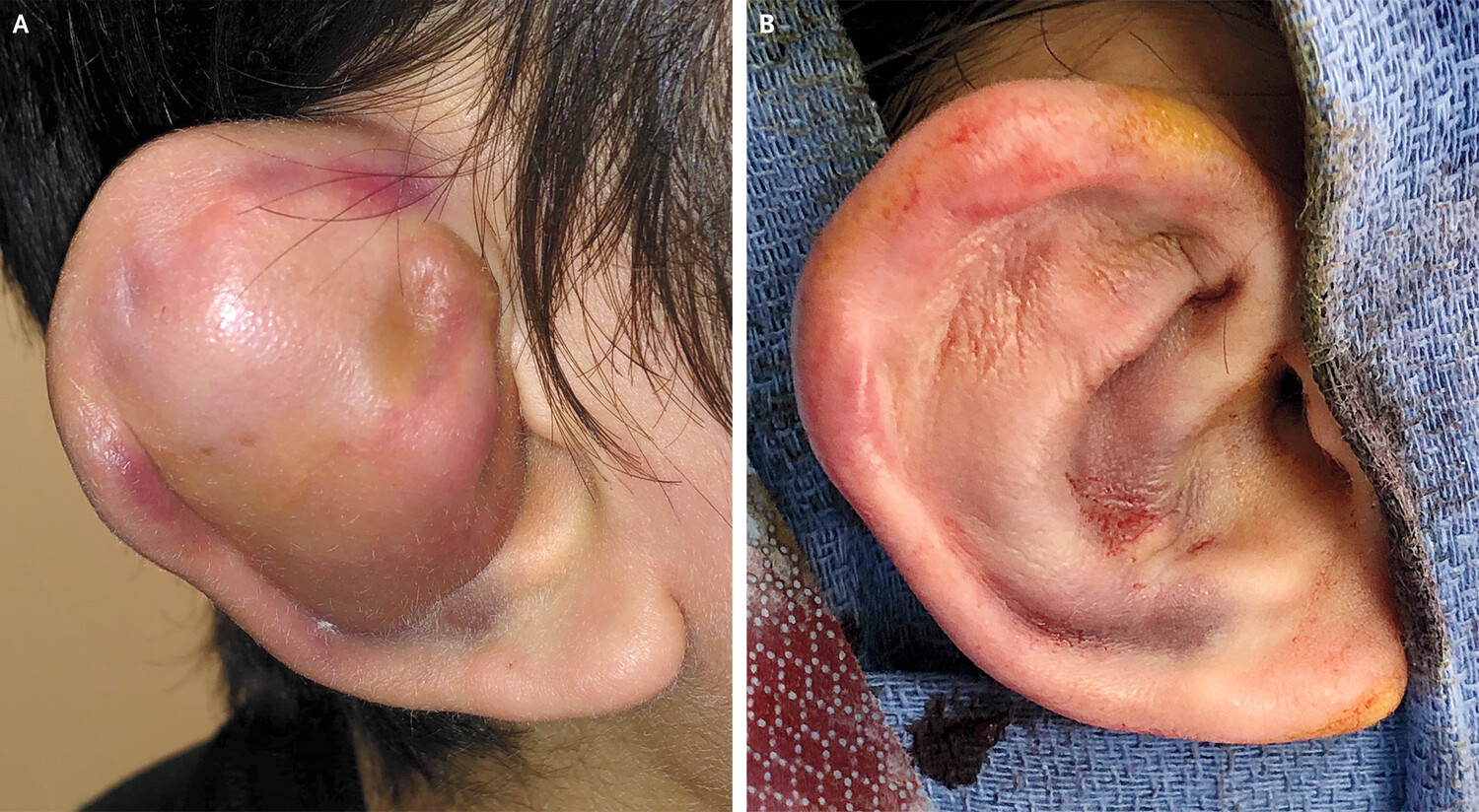
Left: a subcutaneous hematoma, raised and purple-red in the first days. Right: an ear (auricular) hematoma before (A) and after (B) the blood was drained.
How long does a hematoma take to heal?
An ordinary bruise fades within about two weeks without treatment. A larger bruise or a hematoma can take a month or longer (Cleveland Clinic). Bruises in general last from days to months, and a bone bruise is the most severe and painful type (MedlinePlus). As a rough guide:
- Skin bruise: about two weeks (Cleveland Clinic).
- Black eye: 2 to 3 weeks (NHS).
- Hematoma or deep muscle bruise: a month or longer; a firm lump can outlast the colour while the clotted blood is reabsorbed (Cleveland Clinic).
- Blood under a nail: the pain settles within a few days, or at once after drainage, but the dark mark stays for many weeks and grows out with the nail. It takes 6 to 9 months for a nail to grow out completely (Cleveland Clinic). A fingernail that falls off regrows within about 6 months; a toenail can take up to 18 months (NHS).
The change from purple to green and yellow is the sign that the blood is being broken down and reabsorbed (MedlinePlus). A hematoma that is not shrinking after two weeks, or that keeps growing, needs a doctor (Cleveland Clinic).
Hematoma or something else?
Not every painful lump or purple patch is a hematoma. With a clear injury and the usual colour sequence the diagnosis is rarely in doubt. Without an injury, a hematoma should not be assumed. The table lists what else a doctor thinks about.
| Condition | How it differs from a hematoma |
|---|---|
| Bruise (ecchymosis) | Flat discolouration without a lump; fades within about two weeks (Cleveland Clinic). |
| Petechiae and purpura | Pinpoint red dots (under 2 mm) or small flat purple spots that do not go pale when pressed. They point to a platelet, clotting or blood-vessel problem rather than an injury, and should always be checked (MedlinePlus, DermNet). |
| Senile (actinic) purpura | Dark purple 1 to 4 cm patches on the forearms and backs of the hands of older people after minor knocks; thin, sun-damaged skin; harmless (DermNet). |
| Capillaritis (pigmented purpura) | Rust-brown, speckled patches on the lower legs that come and go over months; not caused by an injury (DermNet). |
| Vasculitis | Raised (palpable) purple spots from inflamed blood vessels (DermNet). |
| Superficial thrombophlebitis | A tender, hard, red cord along a vein, usually in a leg, with warm skin over it; often with varicose veins (NHS). |
| Deep vein thrombosis (DVT) | Throbbing pain and swelling in one calf or thigh with red, blue or darkened skin, with or without an injury. Needs same-day assessment (NHS). |
| Cellulitis | Hot, painful, swollen skin, usually red, sometimes blistered; you may feel unwell (NHS). |
| Boil or skin abscess | A painful, warm lump with a soft centre that may leak pus, sometimes with fever (NHS). |
| Lipoma | A soft, squishy, slow-growing lump that is not usually painful and did not follow an injury. Any lump that is hard and does not move, or that is growing, should be checked by a GP (NHS). |
| Erythema nodosum | Tender red nodules on the shins that fade through bruise-like violet, brown and yellow shades over up to eight weeks (DermNet). |
| Nail (subungual) melanoma | A dark band under a nail that was not caused by an injury and does not grow out with the nail. See a GP (NHS). A hematoma, by contrast, follows a knock and moves towards the nail tip as the nail grows (Cleveland Clinic). More on dark bands in our article on nail changes. |
| Angiosarcoma | Rare. A spreading, ill-defined bruise-like patch on the scalp or forehead of an older person that does not heal and may bleed (DermNet). |
Two more things are often mistaken for an old bruise: a thrombosed cherry angioma, which turns black without any injury, and the brown staining that senile purpura leaves behind (DermNet).
Bruising without an injury
An unexplained bruise or hematoma, or bruising that keeps appearing after trivial knocks, is a reason to see a doctor rather than wait. Apart from the common bruise, bleeding into the skin should always be checked (MedlinePlus). The causes are the same ones that make bruising easier: blood-thinning and antiplatelet medicines, steroid medicines, low platelets, inherited clotting disorders, liver disease, blood cancers and ageing skin (MedlinePlus, Cleveland Clinic).
Clues that a bleeding tendency is behind it: nosebleeds that are hard to stop, bleeding gums, blood in the urine or stools, heavy periods, or tiny red dots (petechiae) alongside the bruises (NHS, DermNet). The work-up is a full blood count with platelets and clotting tests; if a clotting disorder is suspected, the level of the clotting factors is measured (MedlinePlus, NHS). If the tests are normal, one possible explanation is purpura simplex, a harmless tendency to bruise easily that we cover in a separate article.
When to see a doctor
Call an ambulance (999 in the UK and Ireland, 112 anywhere in the EU) or go to the emergency department if:
- someone has hit their head and (NHS):
- has been knocked out or cannot stay awake, or has a fit;
- is vomiting, or has a headache that painkillers do not relieve;
- is confused, has memory problems, or has new weakness or numbness;
- has problems with vision, hearing, speech, walking or balance;
- has clear fluid or blood coming from the ears or nose, or bruising behind the ears or around both eyes without a direct blow to the eyes;
- has fallen from more than 1 metre or 5 stairs;
- anyone who takes a blood-thinning medicine or has a clotting disorder has a head injury, even without these symptoms (NHS);
- a limb is in severe, increasing pain and feels tight after an injury or under a cast, with numbness, weakness or pins and needles: this can be compartment syndrome, which needs surgery as soon as possible (NHS, MedlinePlus);
- a painful, swollen leg comes with breathlessness or chest pain (NHS);
- a black eye comes with blood visible in the eye, an irregular pupil, double or lost vision, or an eye that cannot move (NHS);
- a large hematoma comes with pale, cold or clammy skin, fast or slow breathing, or severe pain out of proportion to the injury: signs of significant blood loss (Cleveland Clinic).
Get a same-day appointment (GP, out-of-hours service, NHS 111 in the UK) if:
- blood under a nail is very painful, or the pain is getting worse over the hours after the injury (Cleveland Clinic);
- the outer ear is swollen and misshapen after a blow, so that it can be drained before the cartilage is damaged (BMJ Case Reports 2024);
- the swelling or bruising is getting worse rather than better, especially if you take a blood-thinning medicine (NHS, MSD Manual);
- there are signs of infection: spreading redness, red streaks, pus or fever (MedlinePlus);
- a black eye comes with a headache that does not go away, blurred vision, warmth or pus, fever, or you take a blood-thinning medicine or have a bleeding disorder (NHS);
- bruising comes with nosebleeds, bleeding gums, or blood in the urine or stools (Cleveland Clinic, NHS).
Book a routine appointment if:
- a bruise or hematoma is not improving after two weeks, or a lump remains in the bruised area (Cleveland Clinic);
- you bruise frequently, in large patches, or without any injury, or a bruise keeps coming back in the same place (Cleveland Clinic);
- pain lingers for days after the injury (Cleveland Clinic);
- a black eye has not gone within 3 weeks (NHS);
- a dark area under a nail appeared without an injury (NHS).
How a hematoma is diagnosed
For a hematoma in the skin or a muscle the diagnosis is made from the story (what happened and when) and from examination. Feeling the area matters: a hematoma feels different from healthy tissue, and the doctor checks its size, tenderness and the movement of the nearby joint (Cleveland Clinic). Tests are added when the picture is unclear or the hematoma may be deep (Cleveland Clinic):
- Ultrasound for a shallow collection;
- MRI, the best scan for deeper hematomas, or CT when bleeding inside the skull is suspected;
- X-ray when a fracture is possible, including a crushed finger or toe (Cleveland Clinic);
- blood tests for clotting and vitamin deficiencies when bruising is frequent or unexplained (Cleveland Clinic, MedlinePlus).
A typical bruise or hematoma after a knock can usually be assessed from good photographs and a description of the injury. That is what an iDerma dermatologist does in an online consultation, and the doctor will say when the area must be examined in person instead. The urgent symptoms above are not for an online consultation; they need an emergency department.
Treatment: what helps at home
Smaller hematomas need no treatment beyond the RICE routine that Cleveland Clinic and the HSE recommend for simple bruising and sprains (Cleveland Clinic, HSE):
- Rest: stop the sport or activity and avoid overworking the muscle for a few days (MedlinePlus).
- Ice: an ice pack or a bag of frozen vegetables wrapped in a towel, never directly on the skin, for up to 15 minutes at a time, repeated through the day for the first 24 to 48 hours (Cleveland Clinic, MedlinePlus).
- Compression: an elastic bandage firm enough to support the area; loosen it if the skin beyond it goes numb, cold or pale (Cleveland Clinic, NHS).
- Elevation: keep the injured part above the level of the heart as much as possible, so less blood pools in the tissue (MedlinePlus).
After the first two days, switch to warmth: a warm (not hot) compress several times a day helps the trapped blood disperse (Cleveland Clinic, NHS).
For pain, ask a pharmacist which painkiller suits you. Some common over-the-counter painkillers thin the blood and can make bruising worse, and the choice is different again if you already take a blood-thinning medicine (NHS, Cleveland Clinic).
Do not:
- try to drain a bruise or hematoma yourself with a needle (MedlinePlus);
- massage the area, apply heat, take hot baths or drink alcohol in the first couple of days, because all of these increase swelling (NHS);
- keep running, playing or working through the pain (MedlinePlus);
- ignore pain or swelling that is getting worse instead of better (MedlinePlus).
Treatment: when a doctor needs to act
- Draining the hematoma. A large or very painful collection can be drained with a needle (centesis) or through a small operation, which relieves the pressure on the surrounding tissue and lets the area heal (Cleveland Clinic).
- Blood under a nail. If the pain is getting worse, the doctor makes a tiny hole in the nail plate (trephination) and the blood drains out, usually with immediate relief. If there is a fracture or a deep cut, the nail may have to be removed so the tissue underneath can be repaired. Afterwards keep the area clean and dry; a little bleeding right after drainage is normal (Cleveland Clinic).
- Ear hematoma. The blood is drained urgently with a needle or a small incision and a pressure dressing is applied so the space does not refill; this is done in an emergency department or by an ear, nose and throat specialist. Left undrained, the cartilage can die and the ear stays deformed (BMJ Case Reports 2024, JETem 2026).
- Compartment syndrome. An emergency operation (fasciotomy) opens the tight muscle compartment to restore the blood supply (NHS).
- Bleeding inside the skull. A CT or MRI scan first; a small collection with mild symptoms may be monitored, but most need surgery to remove it (NHS).
- Treating the cause. If the hematoma happened because of a blood-thinning medicine or a clotting disorder, treatment also addresses that cause (Cleveland Clinic).
Possible complications
Most hematomas heal without any complication. The ones to know about are (Cleveland Clinic, MedlinePlus, NHS):
- compartment syndrome, when bleeding into a muscle raises the pressure enough to cut off the blood supply (NHS);
- nerve compression, with numbness, pins and needles or weakness beyond the hematoma (Cleveland Clinic);
- infection, when a hematoma turns into an abscess: spreading redness, pus, fever. An abscess may need to be drained, sometimes with antibiotics (MedlinePlus, NHS);
- a persistent lump when the clotted blood is slow to be reabsorbed (Cleveland Clinic);
- after a nail injury, damage to the bone or the nail bed, which is more likely with a severe crush (Cleveland Clinic);
- with large internal bleeding, shock from blood loss (Cleveland Clinic).
Can hematomas be prevented?
Most happen by accident and cannot be predicted, but the risk can be lowered (Cleveland Clinic):
- wear the protective gear for your sport (helmet, shin pads, hip and elbow pads) and a seat belt in the car;
- keep floors clear of tripping hazards and light up dark stairs and corridors;
- wear shoes that fit, and gloves or boots for manual work; watch your fingers when closing doors and using tools (Cleveland Clinic);
- if you take a blood-thinning medicine, tell any doctor, dentist or surgeon before a procedure, and report unusual bruising (NHS);
- if you bruise easily for no clear reason, get it investigated rather than just protecting the area (MedlinePlus).
What to do now
If any of the urgent symptoms above apply, this is not a skin problem to manage at home: call an ambulance or go to the emergency department. A swollen ear and a very painful nail need a same-day visit because drainage is time-sensitive; a hematoma that keeps growing needs a same-day visit to find out why it is still bleeding.
For an ordinary bruise or hematoma after a knock that worries you (its colour, size, how slowly it is fading, or a lump that remains), you can book an online consultation: send photographs and describe the injury, and an iDerma dermatologist will tell you how to care for it and whether it needs to be examined in person.