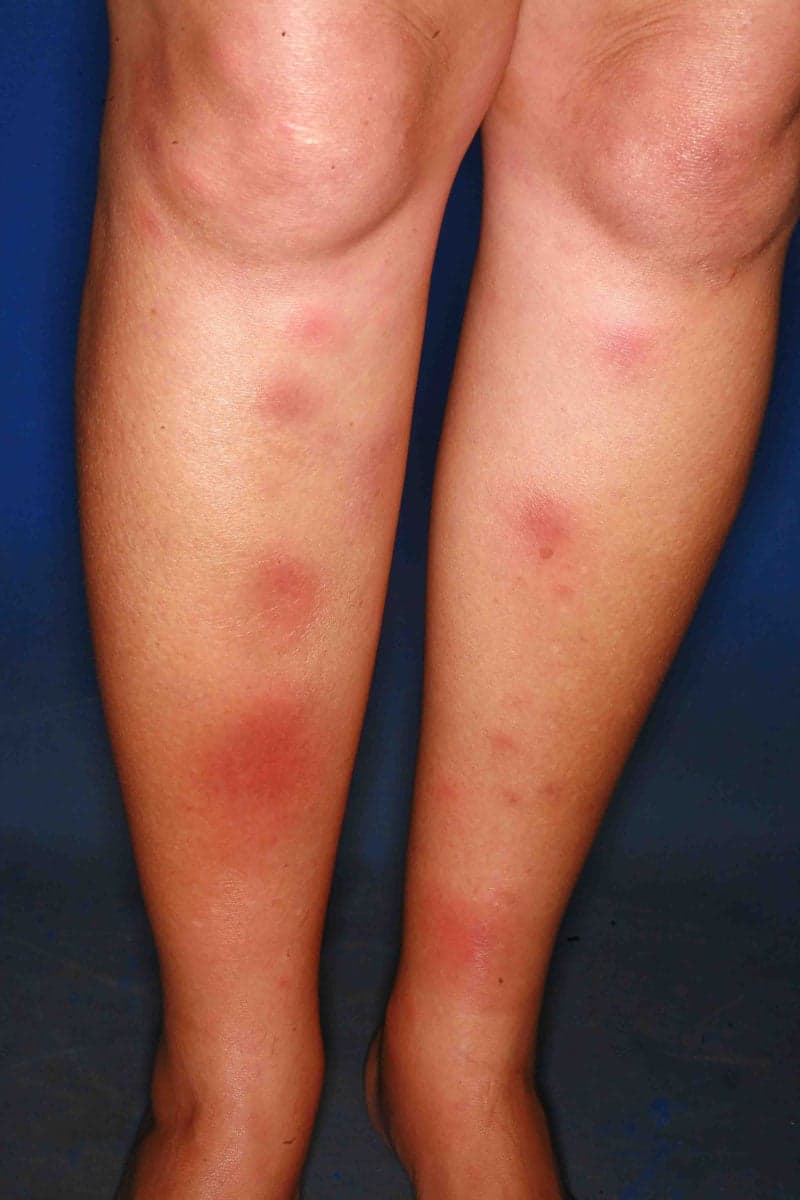
What is erythema nodosum?
Erythema nodosum is an inflammation of the fat layer under the skin that appears as tender, red, poorly defined lumps, usually on the front of both shins (DermNet, BAD). Doctors call this group of conditions panniculitis, and erythema nodosum is its most common form (DermNet panniculitis, AFP review). The inflammation sits in the walls between the fat lobules rather than in the skin itself, which is why the lumps feel deep and can be easier to feel than to see (AFP review, MSD Manual).
The lumps themselves settle on their own within a few weeks and heal without a scar (NHS, BAD, DermNet). In some people, though, they are the first sign of something else, such as sarcoidosis, tuberculosis or inflammatory bowel disease, so a doctor should look for a cause (NHS, AFP review). Erythema nodosum is not inherited (BAD).
Who gets it?
Erythema nodosum can affect people of any age, sex or ethnicity, but it is most common in women between 25 and 40 (DermNet, BAD). In adults, women are affected three to six times more often than men; before puberty, boys and girls are affected equally (DermNet, AFP review). Reported rates range from roughly 1 to 5 new cases per 100,000 people a year (AFP review) to about 2.4 per 10,000 a year in England (BAD); the figures come from different populations.
Symptoms: what erythema nodosum looks and feels like
The skin lumps are the main feature, but many people feel unwell first.
Before the lumps appear
Shortly before the lumps, sometimes one to three weeks earlier and sometimes at the same time, there is often a flu-like phase: a temperature, tiredness, a cough, sometimes weight loss and aching or swollen joints, mainly the knees, ankles and wrists (NHS, BAD, AFP review). In about half of people the ankles are swollen and painful, and this can last for several weeks (DermNet).
The lumps
- Where: the front of the shins and around the ankles, usually on both legs at once. Less often the thighs, arms or neck (BAD); the face is rarely affected (DermNet).
- What they feel like: firm, smooth, raised, painful and very tender to touch or pressure; the skin over them is warm (BAD, DermNet).
- Size and edges: typically 2 to 6 cm across (BAD); in one variant lumps join into plaques up to 20 cm (AFP review). The edges are blurred because the lumps sit deep in the fat (AFP review).
- Colour: bright to deep red at first (DermNet); the NHS describes the patches as red or darker than the surrounding skin (NHS).
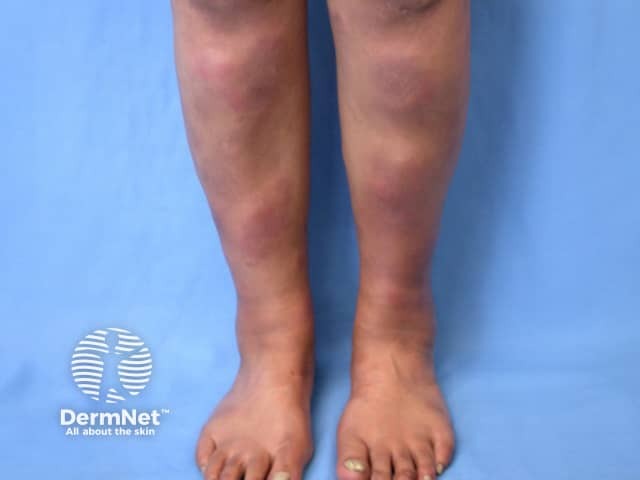
- How they change: new lumps can keep appearing for up to six weeks while older ones fade through purple, then brown or yellow-green, like a bruise. Dermatologists call this stage erythema contusiformis (DermNet, AFP review).
- What they do not do: erythema nodosum lumps do not break open into ulcers and do not leave scars (DermNet, AFP review, BAD).
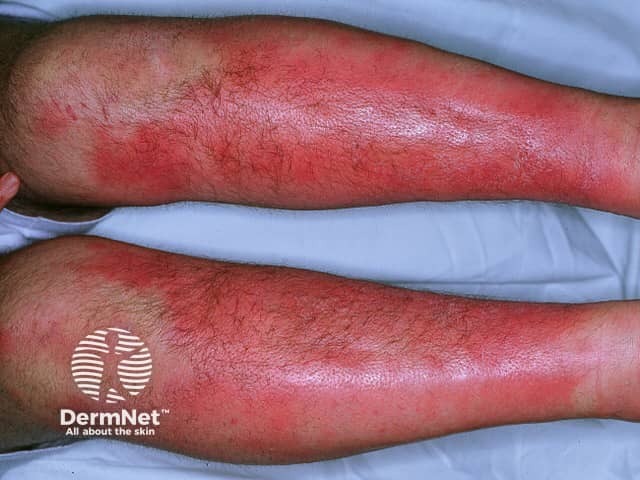
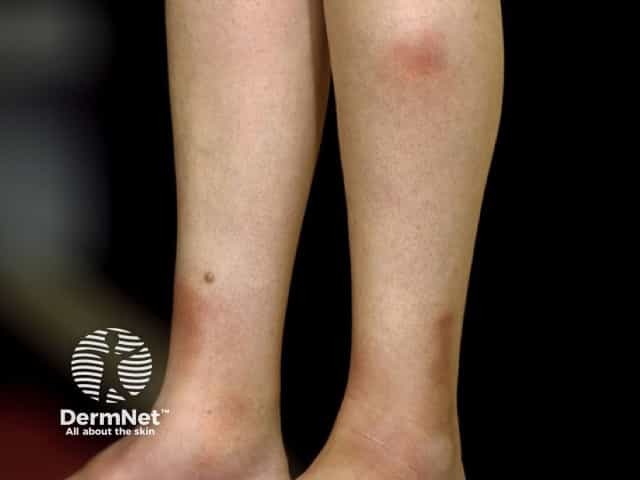
Erythema nodosum pictures: what the photos on this page show
The first photo shows the acute stage on both shins, with redness and swelling so widespread that separate lumps are hard to pick out. The second photo shows the more typical picture, a few separate red lumps on the shin and above the inner ankle with blurred edges. The third photo, further down, shows the healing stage, with purplish, bruise-like patches fading on both lower legs. If the redness is on one leg only and hot and spreading, or the lumps have broken open, see the look-alike table below: those features point away from erythema nodosum (DermNet cellulitis, DermNet).
How long does erythema nodosum last?
An individual lump lasts about two weeks, and fresh crops can appear for up to six weeks (AFP review). Most people are clear within three to eight weeks, and the skin heals without scarring (NHS, BAD). Joint aches and ankle swelling can outlast the lumps by several weeks (NHS, BAD); joint pains persisting for up to two years have been reported (AFP review).
Erythema nodosum comes back in roughly one in three people, and in some it becomes a chronic, relapsing problem lasting six months or occasionally years (DermNet, BAD). Three variants are described as part of the same spectrum: erythema nodosum migrans, which is persistent but causes few symptoms and starts as lumps on one leg that spread outwards; subacute nodular migratory panniculitis, in which lumps on the legs join into plaques up to 20 cm; and chronic erythema nodosum, with less inflamed lumps that persist. Together they make up a small minority of cases (AFP review).
Causes: what erythema nodosum is reacting to
Erythema nodosum is a reaction pattern, thought to be a delayed (type IV) hypersensitivity response of the fat tissue to a trigger somewhere else in the body (AFP review, MSD Manual). In up to 55 per cent of people no trigger is found (DermNet, AFP review). When one is found, it is usually one of these:
- Streptococcal throat infection. The single most common identifiable cause, responsible for up to 44 per cent of adult cases and 48 per cent of cases in children. The lumps typically appear two to three weeks after the sore throat (AFP review, NHS, BAD).
- Sarcoidosis. A rare condition in which small patches of inflamed tissue form in the lungs, lymph nodes and skin. It accounts for 11 to 25 per cent of cases, and a chest X-ray can show swollen lymph nodes in the chest (AFP review, DermNet, NHS sarcoidosis).
- Medicines (3 to 10 per cent). The contraceptive pill and some antibiotics are the medicines most consistently named (DermNet, NHS, BAD).
- Pregnancy (2 to 5 per cent). Erythema nodosum can occasionally start during pregnancy (AFP review, DermNet, BAD).
- Inflammatory bowel disease (1 to 4 per cent). Crohn's disease and ulcerative colitis; keeping the colitis well controlled may prevent further episodes (AFP review, NHS).
- Other infections. Tuberculosis; a chest infection with Mycoplasma; gut infections with Salmonella, Campylobacter or Yersinia; Chlamydia; and deep fungal infections (DermNet, BAD, MedlinePlus, AFP review).
- Rarely (under 1 per cent): lymphoma and other cancers, and viral infections such as hepatitis B, herpes simplex, glandular fever virus or HIV (AFP review, DermNet, MedlinePlus).
- Behçet's disease. A separate, recognised association: up to half of people with Behçet's disease develop erythema nodosum (AFP review, MedlinePlus).
Can stress cause erythema nodosum?
Stress is not among the documented triggers, which are infections, medicines, pregnancy and inflammatory conditions (DermNet, NHS, BAD, AFP review). If your lumps appeared during a stressful period, still mention any recent sore throat or new medicine to your doctor.
Is erythema nodosum autoimmune?
Erythema nodosum is thought to be a delayed (type IV) hypersensitivity reaction to a trigger (AFP review, MSD Manual). It accompanies immune-mediated conditions such as inflammatory bowel disease, sarcoidosis and Behçet's disease (NHS, AFP review, MedlinePlus), but none of the sources for this article classes it as an autoimmune disease.
What else could it be? Look-alikes on the lower legs
Red, painful lumps on the legs have several possible causes, and a few of them need urgent treatment. Use the table to prepare for the conversation with your doctor, not to diagnose yourself.
| Condition | How it differs from erythema nodosum |
|---|---|
| Cellulitis | A bacterial skin infection: one hot, painful, swollen, spreading area, usually on one leg, often with fever. It needs antibiotics the same day: contact a doctor urgently (NHS cellulitis, DermNet cellulitis). Bilateral redness is more often something else (DermNet cellulitis). |
| Superficial thrombophlebitis | A clot and inflammation in a vein just under the skin: redness and tenderness along a line following the vein rather than round lumps. Varicose veins, pregnancy and the contraceptive pill raise the risk (DermNet superficial thrombophlebitis). |
| Deep vein thrombosis (DVT) | Throbbing pain and swelling of one whole calf or thigh, with red, blue or darkened skin. Get same-day help from your GP or an urgent care service (NHS 111 in the UK); call 112 (999 in the UK) if you are also breathless or have chest pain (NHS DVT). |
| Lipodermatosclerosis | Hardening of the fat on the lower legs caused by poor vein function, usually in both legs; the acute phase can mimic cellulitis and the leg can take on an "upside-down champagne bottle" shape. Often seen with varicose veins and stasis dermatitis (DermNet lipodermatosclerosis). |
| Nodular vasculitis (erythema induratum) | Lumps on the backs of the calves rather than the shins, slow to evolve, which may ulcerate; sometimes linked to tuberculosis (DermNet nodular vasculitis). Other forms of vasculitis cause purple spots (purpura) when small vessels are involved, and nodules when medium-sized vessels are, as in nodular vasculitis (DermNet cutaneous vasculitis). |
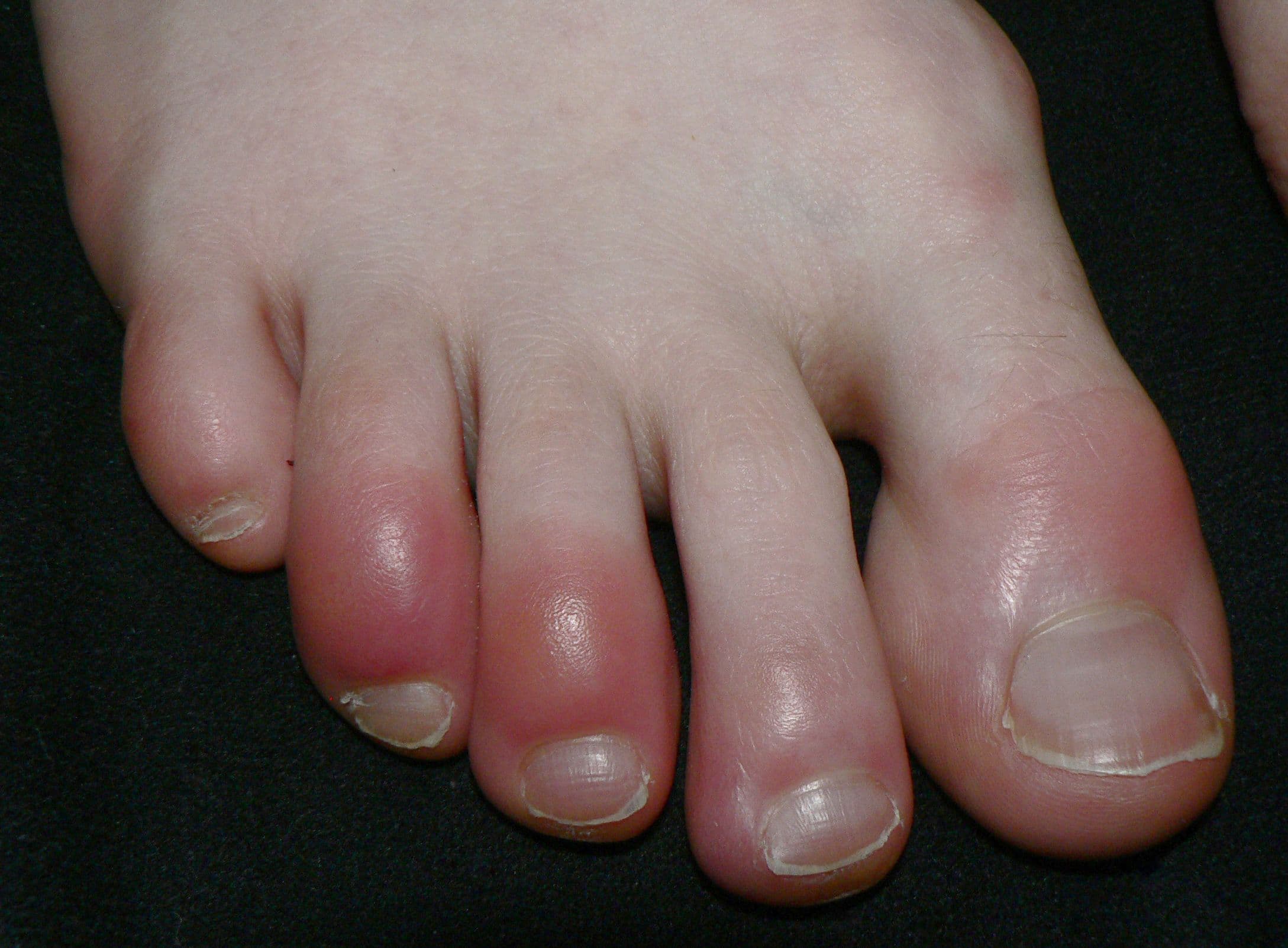
| Chilblains | Tender or itchy bumps on the toes, fingers or other cold-exposed sites after damp cold weather (DermNet chilblains). |
| Insect bite | A small swollen lump with pain and itching where you were bitten, sometimes several grouped together (NHS insect bites). |
| Bruise or haematoma | Pooled blood under the skin after an injury (Cleveland Clinic). |
| Sarcoidosis of the skin | Tender reddish-brown or purple bumps on the lower legs and arms that can accompany lung symptoms. Sarcoidosis can also trigger true erythema nodosum, so the two overlap (NHS sarcoidosis, DermNet). |
| Lupus panniculitis | Deep inflamed lumps in lupus that heal with scarring, unlike erythema nodosum (DermNet SLE). |
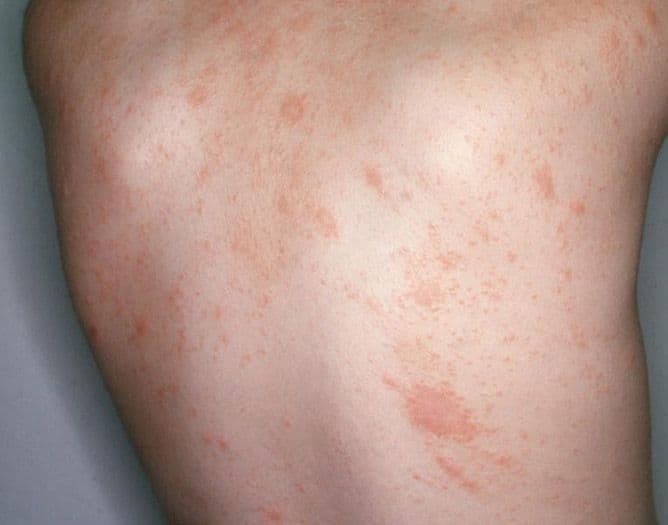
| Erythema multiforme | Symmetrical "target" spots with concentric rings on the hands, feet and forearms, usually after a cold sore virus, rather than deep lumps on the shins (DermNet erythema multiforme). |
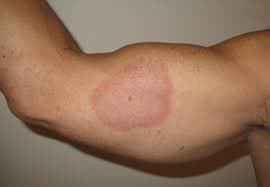
| Lyme disease | A spreading circular or oval rash around a tick bite, often with a darker or lighter centre; usually not hot or itchy (NHS Lyme disease). |
Deep lumps that are not on the legs, that ulcerate, or that last longer than eight weeks make a dermatologist think of the rarer forms of panniculitis, which include those linked to localised scleroderma, dermatomyositis, pancreatic disease and deep granuloma annulare; a biopsy sorts them out (DermNet, DermNet panniculitis).
When to see a doctor
Because the trigger can matter more than the lumps, it is sensible to be seen at least once (AFP review). The NHS advises seeing a GP if the condition affects your daily life, if lots of lumps or marks keep appearing, or if they have not gone after eight weeks (NHS).
Get same-day help from your GP or an urgent care service (NHS 111 in the UK) if:
- one area of skin is hot, painful and swollen and spreading, especially with fever: this is how cellulitis presents (NHS cellulitis);
- one whole leg is swollen with throbbing pain in the calf or thigh: a possible deep vein thrombosis (NHS DVT).
Call 112 (999 in the UK) if leg pain and swelling come with breathlessness or chest pain (NHS DVT).
Tell your doctor at the first visit if you also have any of these, because they point to a cause that needs its own treatment: a cough lasting more than three weeks, night sweats or unexplained weight loss (NHS tuberculosis); diarrhoea with blood or mucus and abdominal pain (NHS Crohn's disease, NHS ulcerative colitis); shortness of breath or a persistent cough (NHS sarcoidosis); recurrent mouth or genital ulcers (NHS Behçet's disease); or a recent sore throat, chest infection or new medicine (NHS, BAD).
How erythema nodosum is diagnosed
A doctor can usually recognise erythema nodosum from the rounded, tender lumps in the typical sites (BAD, NHS). The work-up is mostly about finding the trigger. Depending on your history it may include (DermNet, AFP review, MSD Manual):
- Blood tests: a full blood count and inflammation markers (CRP, ESR), which are often raised during the eruption (AFP review).
- Streptococcal tests: a throat swab and an antibody blood test (ASO), repeated within four weeks, since the lumps appear two to three weeks after the sore throat (DermNet, AFP review).
- Chest X-ray: to look for sarcoidosis or tuberculosis (DermNet, MedlinePlus).
- Tuberculosis test: a skin test or an interferon-gamma blood test, depending on your risk (DermNet, AFP review).
- Stool tests: if you have had diarrhoea or abdominal pain, to look for gut infections; if inflammatory bowel disease is suspected, your doctor arranges its own tests (DermNet, AFP review).
- Other tests as needed: viral blood tests and an autoantibody screen (DermNet, MSD Manual).
Do I need a skin biopsy?
Not usually: a biopsy is taken if the diagnosis is in doubt (BAD, MSD Manual), or when the atypical features described above raise the question of another form of panniculitis (DermNet). Because the inflammation lies deep in the fat, a deep incisional or excisional sample is advised rather than a small punch biopsy, which is likely to miss it (AFP review). The biopsy is done under local anaesthetic and shows inflammation of the walls between fat lobules without inflamed blood vessels (DermNet, DermNet skin biopsy).
Treatment
There are two parts to treatment: easing the lumps while they settle, and treating whatever triggered them (BAD, NHS, DermNet).
What you can do yourself
- Rest with your feet raised on a pillow, and avoid long periods of standing, walking and running until the lumps have faded (NHS, BAD).
- Put a cool, wet compress such as a damp cloth on the painful areas (NHS, BAD).
- Ask a pharmacist about supportive bandages or compression stockings, which ease the ache in the legs (NHS, DermNet).
- Anti-inflammatory painkillers bought over the counter help the pain and swelling (BAD, AFP review, MSD Manual). They are themselves among the uncommon medicine triggers (DermNet), so tell your doctor if the lumps began soon after you started one. For a child, ask a pharmacist which painkiller and dose are suitable. Adults should take the smallest dose for the shortest time; for the most common of these painkillers the NHS advises no more than 10 days without a doctor's advice and never alongside another anti-inflammatory painkiller (NHS painkiller guidance). Two further cautions: if you have Crohn's disease or colitis, do not take them unless your doctor tells you to; and in pregnancy avoid them unless a doctor or pharmacist has advised them, because a plain painkiller without anti-inflammatory action is usually the better choice (NHS, NHS painkiller guidance).
- If the pain is severe, a pharmacist can suggest stronger painkillers and may suggest you see a GP (NHS).
What your doctor may prescribe
- Treatment of the cause. Antibiotics if a bacterial infection such as a streptococcal throat infection is found; the specific treatment for tuberculosis, sarcoidosis or inflammatory bowel disease if one of these is diagnosed (NHS, BAD, AFP review).
- A medicine review. If a medicine such as the contraceptive pill or an antibiotic is the suspected trigger, your doctor may advise stopping or switching it. Do not stop a prescribed medicine on your own (NHS).
- Steroid tablets. Reserved for prolonged or frequently recurring erythema nodosum, and only after infection and other serious causes have been ruled out, because they can worsen a hidden infection (NHS, BAD, DermNet, MSD Manual).
- Other prescription options include an oral solution that reduces the inflammation, taken for about a month (DermNet, MSD Manual), and, when Behçet's disease is also present, a tablet used for that condition (AFP review). Your dermatologist chooses between these on the basis of your tests.
Erythema nodosum in pregnancy and with the contraceptive pill
Pregnancy accounts for 2 to 5 per cent of cases, and the contraceptive pill is a recognised medicine trigger (AFP review, DermNet, BAD). Tell your midwife or GP about the lumps so that the usual checks for other triggers are still done. For pain relief in pregnancy, the NHS advises a plain painkiller without anti-inflammatory action as the usual first choice, and avoiding anti-inflammatory painkillers unless a doctor or pharmacist has advised them (NHS painkiller guidance). If the pill is the likely trigger, your doctor can discuss other contraception; do not stop it without a plan in place (NHS).
Erythema nodosum in children
Children get the same tender lumps on the shins, and in children a streptococcal throat infection is the trigger in almost half of cases (AFP review, BAD, MSD Manual). Boys and girls are affected equally before puberty (DermNet, AFP review). Every patient with erythema nodosum, including a child, should have a throat swab and streptococcal antibody test (AFP review). The lumps heal without scarring (BAD).
Outlook
Erythema nodosum follows a benign course: the lumps clear within weeks, leave no scar and are uncomfortable but not dangerous in most cases (DermNet, MedlinePlus). The things that shape the outlook are the trigger, which may need treatment of its own, and the chance of recurrence, which is about one in three (DermNet, BAD). A rare complication is encapsulated fat necrosis, a mobile encapsulated fatty lump at the site (DermNet).
Online dermatologist consultation
If you have painful red lumps on your shins and want to know whether they look like erythema nodosum, you can book an online consultation. Send clear photographs of both legs, one from a distance and one close up, and describe when the lumps appeared, whether you had a sore throat, cough, diarrhoea or a new medicine in the weeks before, and whether you are pregnant. The iDerma dermatologist will tell you whether the picture fits erythema nodosum or one of its look-alikes, which of the tests above are worth asking your GP for, and whether anything in your photos or story needs same-day in-person care. Blood tests, a chest X-ray and a biopsy are arranged through your GP or a local clinic; an online consultation does not replace them.
What to do now
- Check for the urgent patterns first: one hot, spreading, swollen area, or one whole swollen leg with throbbing pain. If either fits, seek same-day care (NHS cellulitis, NHS DVT).
- Write down the two or three weeks before the lumps: sore throat, cough, diarrhoea, fever, new medicines, a new contraceptive, possible pregnancy (AFP review, BAD).
- Rest with your legs raised, use a cool compress, and ask a pharmacist about compression stockings and painkillers that suit you (NHS, BAD).
- Book a GP or dermatologist appointment for the trigger work-up, even if the lumps are already fading; treating the underlying disorder is the most important step in management (AFP review).
- Go back if the lumps have not cleared after eight weeks, keep returning, ulcerate or appear somewhere other than the legs (NHS, DermNet).